Vegan Wines: Discover the vegan wines—
—from our Beaujolais winery

Although still not widely sought after by the general public, vegan wines have been steadily gaining popularity in recent years. They are not intended solely for vegans: they are also less likely to cause allergic reactions and are produced using sustainable and responsible methods.

Fabienne Vilain and Denis Garnier, owners of Château de Champ-Renard and managers of the estate’s vineyard, have been offering authentic wines free of animal-derived ingredients —produced in their Beaujolais winery —since 2014; these wines have been officially certified vegan since 2019.

Discover our philosophy and our products…
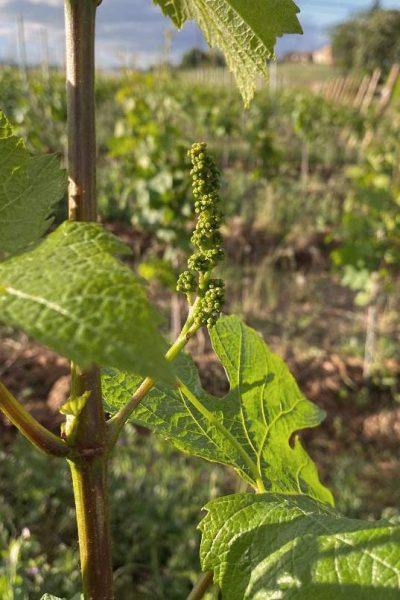
vine

Why offer (and drink) vegan wines?

Consumers are not always aware of this, but traditional wine often contains animal-derived ingredients that are used during the wine clarification process when fining is performed, a method designed to stabilize the wine and make it clearer before bottling using coagulants such as albumin (a protein found in egg whites), casein (a protein found in cow’s milk), fish glue (a glue made from a mixture of fish skin and cartilage), or animal gelatin (a mixture of skin, bones, and organs from farm animals).

Drinking vegan wines therefore allows vegan and vegetarian consumers to enjoy a fine vintage without consuming animal products, and also enables people who are intolerant of or allergic to eggs or lactose to indulge without risk or uncomfortable reactions.

It is also an eco-friendly initiative that prioritizes the conservation of resources and the environment. In fact, this is precisely what motivated the owners of the Château de Champ-Renard to make this choice…

Champ-Renard: A winery that prioritizes sustainability

When the entrepreneurial couple Fabienne Vilain and Denis Garnier decided to become the owners of the Château de Champ-Renard and breathe new life into the estate’s vineyard, choosing a production method that promoted sustainability and the ecosystem was a natural choice for them.

They have therefore refused to use herbicides and pesticides to maintain the vineyards surrounding the château and have opted for natural winemaking without added sulfites. The estate has also obtained Terra Vitis and HEV3 certifications, which attest to its commitment to biodiversity and the health of consumers and those working on the estate, and it is currently in the process of converting to organic farming.

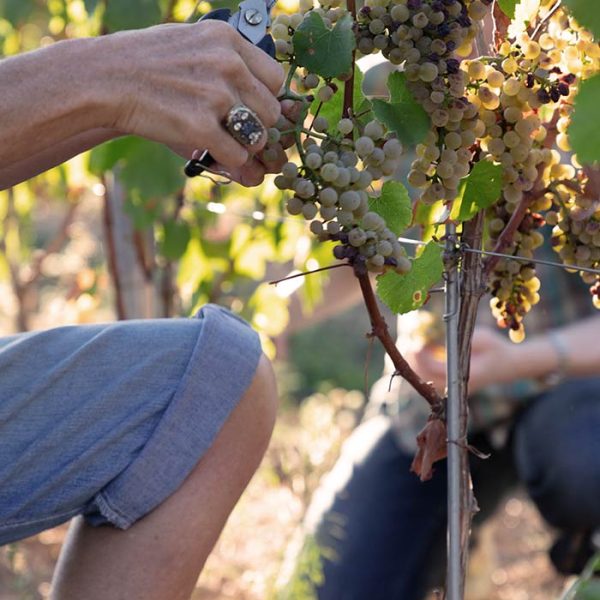
hand-harvested

Committed to supporting the local economy and becoming increasingly environmentally friendly, the two winemakers turned to an eco-friendly company to manufacture the corks for their bottles (Amorim), hired local artisans to design the labels for their vintages (Gilles Pierre, in Saint-Étienne) and print them (Label G2, in the Beaujolais region), ensuring that no part of the process is outsourced outside of France.

For them, the decision to produce vegan wines was part of the same approach—that of “sustainable, responsible, and environmentally friendly production, ” as Fabienne Vilain explains. Even though vegan wines are still relatively niche, they are environmentally friendly, animal-friendly, and good for consumers’ health—and are therefore very much in line with current trends.

To comply with EVE Vegan certification, no animal-derived products are used throughout the entire production chain: no animal-derived fertilizers are used in the vineyard, and the labels are also affixed to the bottles with 100% vegan adhesive.

The château’s vegan Beaujolais wines are “natural,” fruity, and rich in aromas. The estate produces both white (Chardonnay) and red (Gamay, Gamaret) wines, which are available for purchase at the château and online.

Château de Champ-Renard also offers private guided tours of its estate, including a tasting of its finest vintages. For more information, click here or contact us.