Sustainable viticulture
for quality wines:
Welcome to Champ-Renard

Champ-Renard, a former medieval castle in the Beaujolais region, also offers red and white wines with no added sulfites, thanks to its historic vineyard and authentic Beaujolais cellar, which dates back to the 18th century.

Taken over by Fabienne Vilain and Denis Garnier in 2014 after a long period of inactivity, the Champ-Renard estate in Blacé has become an eco-friendly vineyard based on sustainable viticulture that prioritizes biodiversity and careful observation of the vineyard plots.
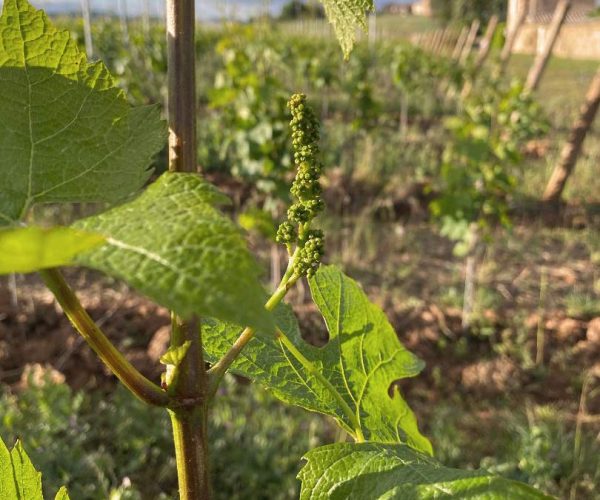
vine

An Ethical and Eco-Friendly Wine-Growing Project

After purchasing the Château de Champ-Renard in 2014, the entrepreneurial couple Fabienne Vilain and Denis Garnier had to completely restructure its vineyard, which is located around the château’s walls and had been neglected for years. The first step was to treat the vines in an effort to save as many as possible and allow the winery to get off to a good start.

However, once this first step is complete, these new winemakers begin to question their approach and the impartiality of their supplier. They then embark on a long learning process to adopt eco-responsible practices that respect the environment and biodiversity.

They are supported by the Rhône Chamber of Agriculture and its technical expert, who visits weekly to advise and guide them in their practices: they use cover crops and organic products, allowing insects to return to the area. The goal: to avoid chemical treatments as much as possible and permanently eliminate the most harmful products.

Over the years, the Champ-Renard estate has earned several certifications that serve as a testament to its reliability and quality: Terra Vitis in 2018, HVE3 (High Environmental Value, Level 3) in 2019…

The first label focuses on a comprehensive approach to eco-responsible viticulture, ranging from the vineyards to bottling, and taking health considerations into account. HVE3, on the other hand, is a certification focused on biodiversity and vineyard management. The landscape of the farm (agroforestry) plays a key role in this certification: the presence of trees and shrubs contributes to the richness of the environment and the soil. This environmental quality is then reflected in the final product. However, only 1,900 vineyards in France are currently HVE-certified.

From Vine to Glass: A 360° Approach

Currently undergoing renovations to modernize its tasting rooms and winemaking facilities, the Champ-Renard estate is constantly evolving, while never straying from its unique approach that combines viticulture and sustainable development.

Currently in its first year of transitioning to organic farming, the estate has, for example, purchased a straddle tractor for its oldest vineyards, as well as various tilling tools capable of adapting to both wide and narrow rows, to ensure soil cultivation and production methods that respect the soil and the ecosystem.

This commitment goes hand in hand with the preservation and promotion of the heritage of this exceptional historic site, which was once owned by the lords of Beaujeu and even hosted Thomas Jefferson during a brief visit. Today, the château hosts seminars and family receptions, as well as tourists visiting the region to discover the wines of Beaujolais. Champ-Renard offers private tastings of its wines and various wine-related activities.
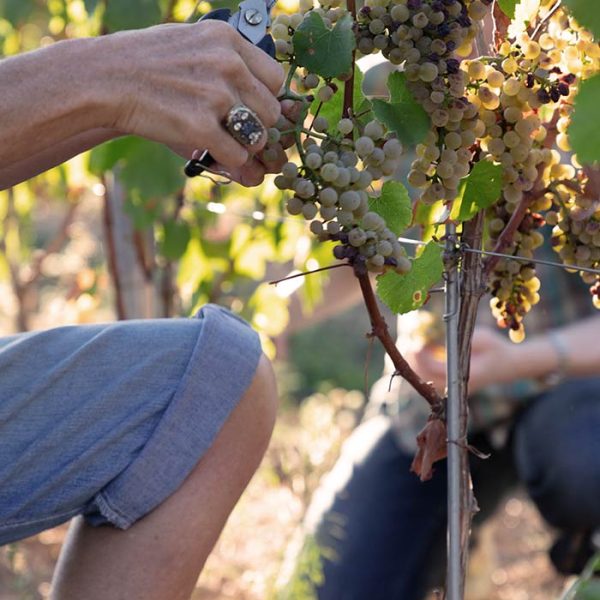
hand-harvested

Vegan wines with no added sulfites

This brings us to the other cornerstone of the estate’s philosophy, which is fully in line with its thoughtful approach: the production of “green” wines.

The château’s Gamay and Chardonnay wines are not only made from naturally grown grapes, but the entire production process—from harvesting to bottling, including winemaking—also adheres to responsible practices.

As a result, the winemaking process is carried out without added sulfites and with as little oxygen as possible. The goal? To produce fine wines, free of “deviations,” and to rediscover the subtle aromas that, in some cases, had been lost with conventional methods.

Of course, some wines do require sulfites to ensure stability and shelf life. But in such cases, they are added during bottling, not during winemaking. This keeps the overall sulfite content to a minimum, thereby preventing headaches and bloating.

Finally, all of the estate’s wines are certified vegan (EVE Vegan label), meaning they contain no animal-derived ingredients—egg whites are often used in traditional winemaking. They can be enjoyed not only by vegans but also by consumers with allergies to albumin and casein.

In conclusion, as Fabienne Vilain and Denis Garnier point out, “What matters here is experience and constant questioning.” “Questioning every decision, defining a course of action in line with one’s values, ensuring the work is done with the right equipment, mastering the techniques… This journey is inspiring and exhilarating because of the richness of the encounters and discoveries.”

Would you like to discover the château’s wines alongside our winemakers?