
First observation: This type of event is radically different from a simple office meeting.Organizing a corporate seminar may seem simple to someone who has never been tasked with it, but it actually involves a series of complex decisions. While a poorly organized conference fails to meet its objectives, a carefully planned conference sets the stage for a successful event that leaves a lasting impression. Objectives, format, budget, timing, choice of venue and vendors, logistics: nothing should be left to chance.
What are the key challenges of a corporate seminar or team-building event?
This event goes beyond simply bringing your employees together outside the office. The real challenge lies in creating the conditions for a productive break from the daily routine while strengthening team cohesion. Thorough preparation for the seminar is key to the participants’ experience and the results achieved.
Unique Features and Benefits of Corporate Seminars
These events offer a unique opportunity to bring a team or committee together to work on a shared project, free from the usual time constraints. Conferences also have the advantage of boosting motivation, stimulating creativity and innovation, and strengthening team spirit and collaboration.
Organizational Considerations
To achieve their objectives, corporate events must be carefully planned and anticipated. Whether the goal is to align the strategies of different departments or retail locations, or to address a substantive issue, only meticulous organization can ensure the seminar’s success.

How to Organize a Corporate Seminar Step by Step?
Organizing a business seminar follows a logical process that must be established well in advance of the scheduled date.
1 – Define the Objectives
The goal here is to answer the following question: Why organize a seminar? It could be a back-to-work meeting aimed at re-engaging employees after the summer break. It could also be an orientation seminar for new hires or a team-building event to strengthen team cohesion. An executive seminar, or CoDir, brings together senior executives to define the company’s objectives or areas of development. Finally, a training day aligns skills and work practices with the company’s strategy.
Defining the type of seminar and the specific expected outcomes helps determine the appropriate format, number of participants, duration, and venue.
2 – Set the budget
The projected budget should include the various expenses associated withorganizing seminars:
- rental of the event venue;
- catering;
- accommodations, if applicable;
- entertainment or team-building activities;
- transportation and logistics costs;
- technical equipment, if necessary;
- speakers…
In addition to these quantifiable expenses, you should include a contingency fund for unforeseen costs. This will give you a reliable basis for estimating the cost of the seminar per participant. This budget, in turn, will determine your choice of venue and services.
3 – Choose the Date
Here again, the golden rule is to plan ahead. For a seminar with 20 to 100 participants, allow three to six months for planning. This timeframe can extend to a year for larger events.
Certain times of year are not ideal fororganizing a professional conference. In particular, avoid the start of the school year in September, the end of the year, or school vacation periods. The event would then be a burden that is difficult to reconcile with employees’ family lives.
One final advantage of planning the seminar well in advance is that it allows you to secure participants’ availability well ahead of time.


4 – Create a reverse schedule
This involves breaking down the planning process into distinct steps:
- choosing a venue and making a reservation;
- selecting vendors;
- sending invitations to participants;
- internal communication;
- developing the program;
- logistics (transportation, catering, and accommodations).
Assigning each task to a designated staff member clarifies everyone’s responsibilities and simplifies the overall organization.
5 – Preparing the Program
A well-organized corporate seminar relies on a balance between plenary sessions, small-group workshops, social time, and recreational or sports activities. An overly packed program can be counterproductive, but a loose schedule reduces participant engagement. Striking the right balance between these different elements is what distinguishes a memorable seminar from one that is quickly forgotten.


Where should you hold a professional conference or team-building event?
The choice of venue for a corporate seminar is key to its impact and success. It is therefore a strategic decision in its own right, distinct from other organizational steps.
Criteria to Consider When Selecting a Seminar Venue
The setting in which the event takes place directly influences participants’ attention, the creativity of discussions, and the quality of the experience. Choosing a seminar venue involves bringing together the following elements:
- Modular spaces for a seamless transition between different times of the day;
- availability and quality of amenities (Wi-Fi, projection and sound equipment, hybrid meeting capabilities, lighting, and air conditioning, etc.);
- à la carte dining options, from a welcome coffee to a gala dinner;
- on-site lodging options for organizing a residential seminar;
- Ease of access for participants;
- a change of scenery and a break from the usual work environment.
Choosing a venue with character
Hosting a seminar at a castle or a prestigious estate lends the event a symbolic value that hotels and business centers simply cannot provide. This choice sends a clear message to participants: the company is investing in a high-quality shared experience and values its team’s work.

Why choose Champ-Renard as your seminar venue?
Located just 35 minutes from Lyon, our property combines luxury, flexibility, and accessibility.
Versatile and Complementary Spaces
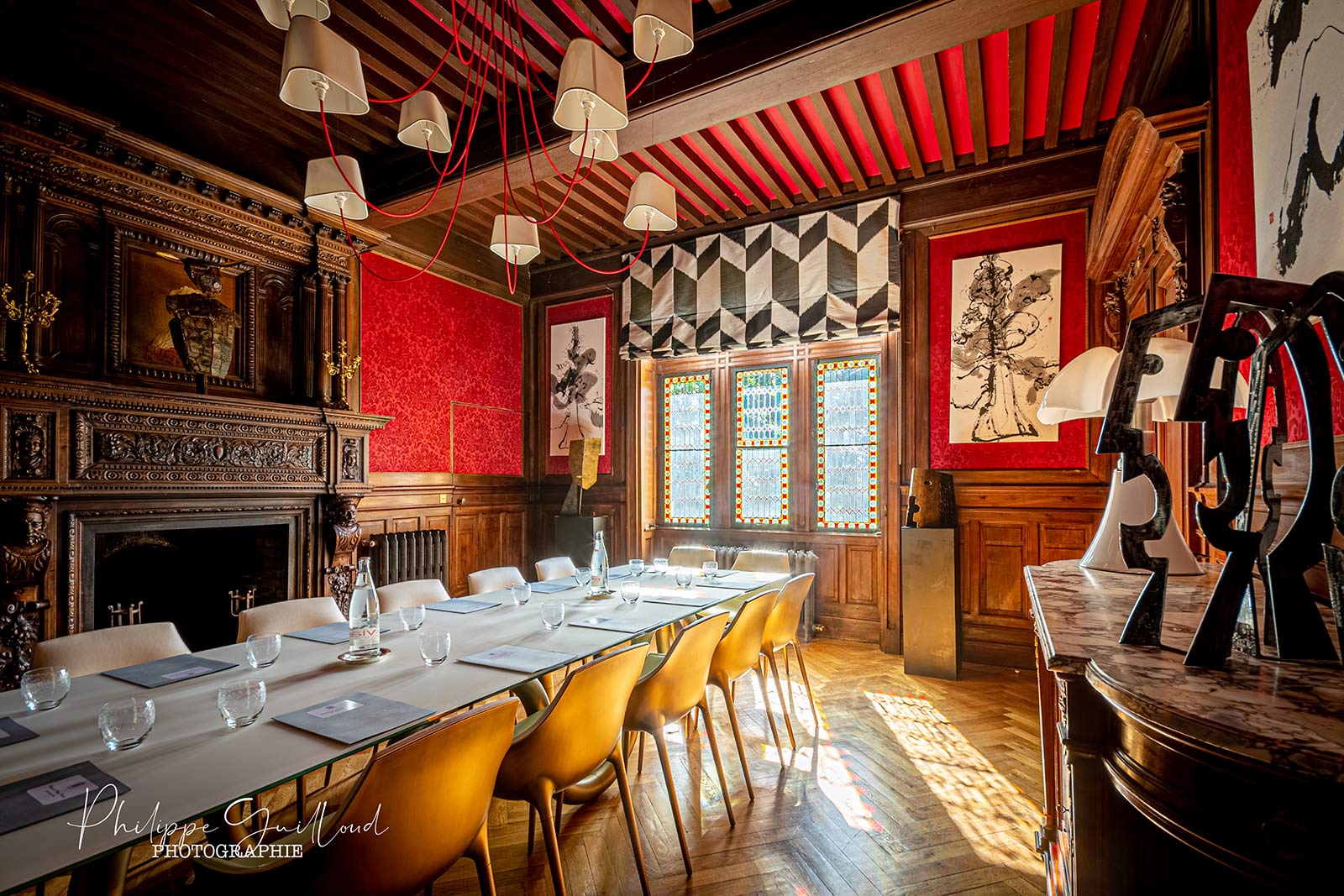
The Château de Champ-Renard is the perfect setting for organizing a team-building event or a residential seminar. The estate offers a variety of prestigious indoor and outdoor spaces:
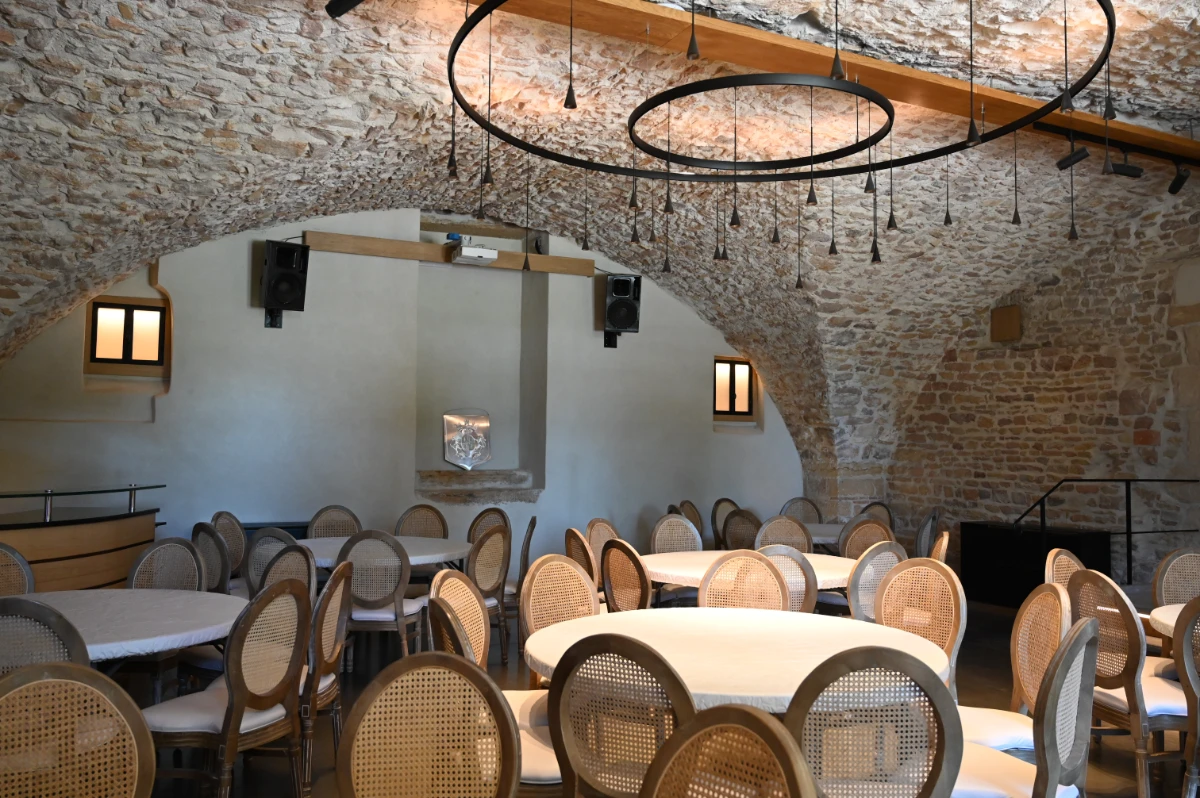
- The Guard Room: With its local stone vaults and a view of the wine cellar, this superb 200 m² space can accommodate up to 200 people for a plenary meeting or a corporate event.
- The Justice Room: Adjacent to the Guard Room, it offers 100 m² of space and 3.60 m of ceiling height for medium-sized events (up to 90 people for a conference or 120 guests for a cocktail reception).
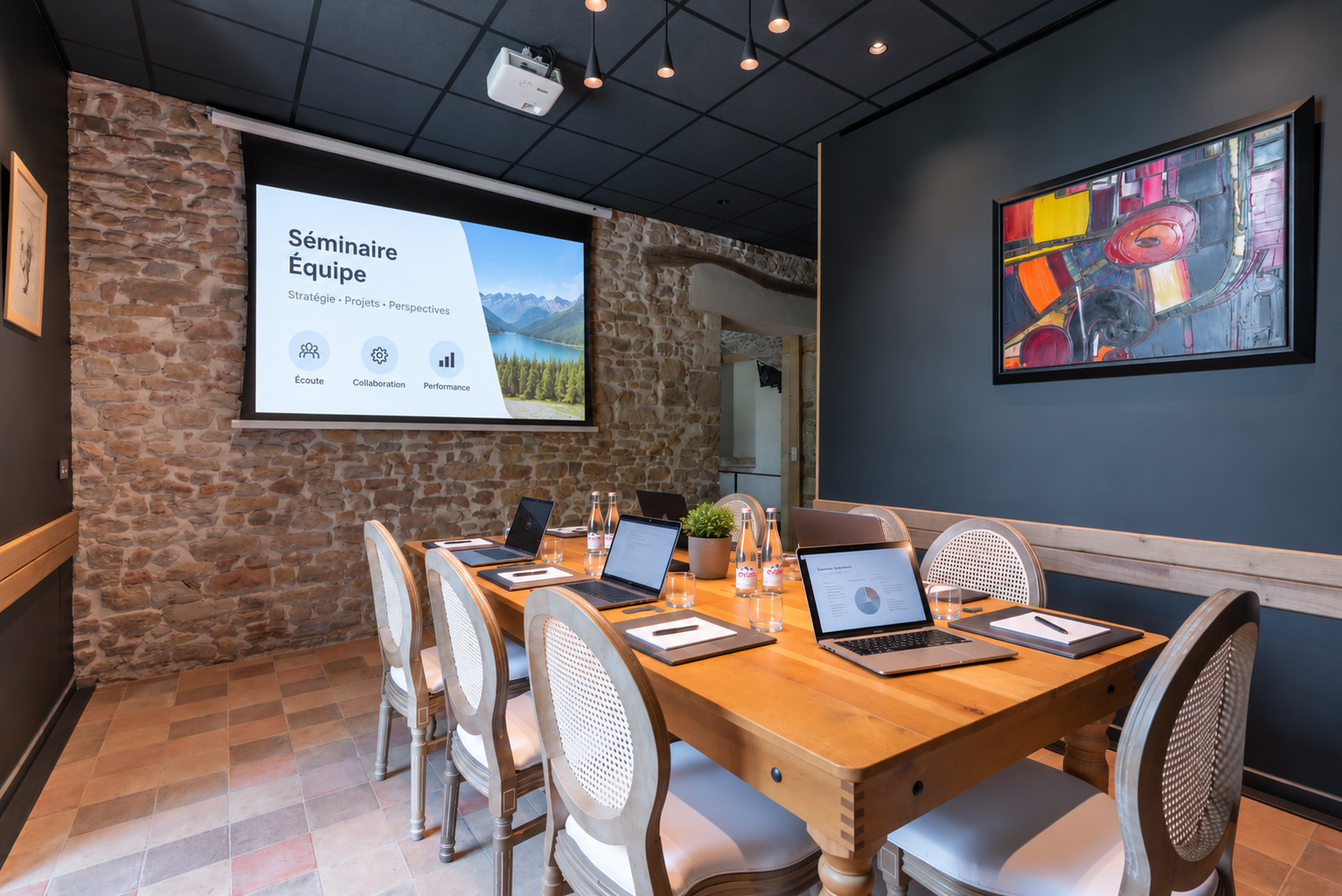
- The three subcommittee rooms: equipped with 65-inch LED screens, they offer 20 to 40 m² of space for workshops or small-group meetings.
- The Marquis Lounges: Spanning 200 m², these adjoining rooms are perfectly suited for an executive committee meeting in an elegant and intimate setting.
- The Esplanade and the Allée des Charmilles: these spaces are ideal for breaks, outdoor activities and entertainment, a barbecue, or a garden party.
Professional Support
The Champ-Renard team offers top-tier services and meticulous management. Each company benefits from support from a dedicated contact person and customizable packages, ranging from venue rental alone toturnkey seminar planning.
We have a selection of reputable service providers at your disposal: caterers, entertainers, DJs, decorators, and more. Our entertainment catalog features over 30 different options, ranging from a Murder Mystery Party at the château to wine tastings in the cellars, as well as team-building activities in the estate’s vineyards.
Champ-Renard also offers on-site accommodations in the château’s two charming guesthouses. In addition to these twelve beds, there are numerous other options available at partner establishments located less than five minutes from the property.
Organizing a successful corporate seminar hinges on three key elements: clear objectives, advance preparation, and a high-quality setting.
Champ-Renard, an exceptional estate in the Beaujolais region just 35 minutes from Lyon, transforms an ordinary business meeting into an unforgettable event for your teams. Take advantage of our Open House days on November 28 and 29, 2026, to tour the grounds and plan your next seminar in Lyon.